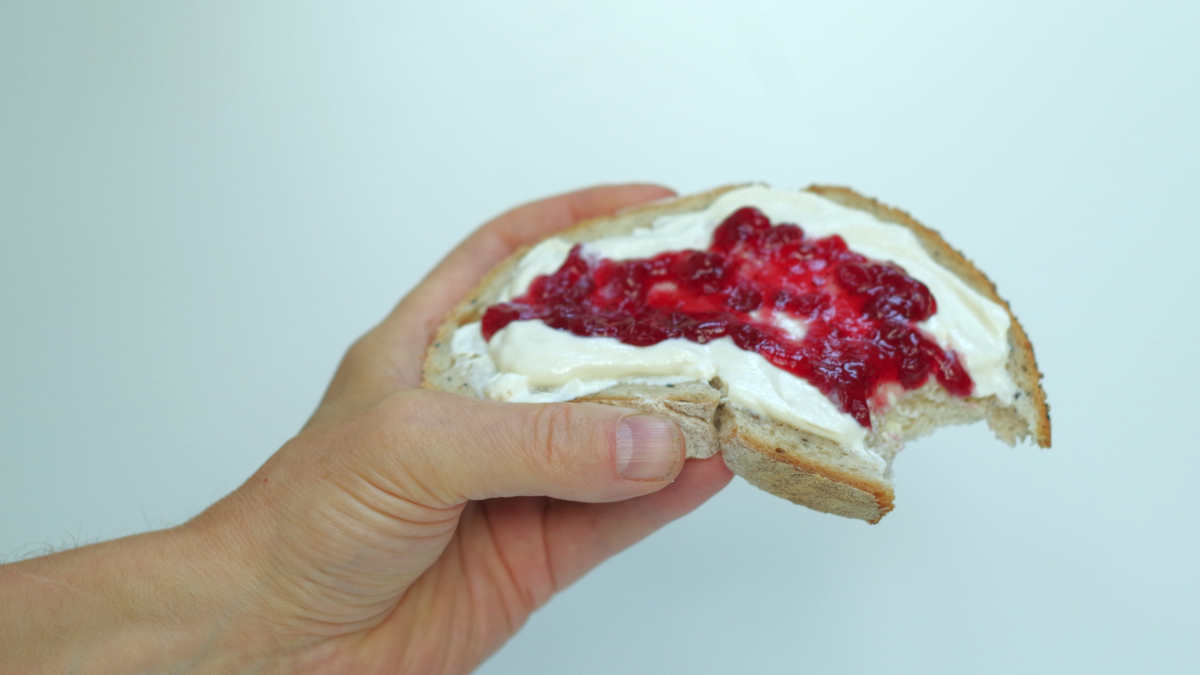
Fresh white cheese, or cottage cheese. They call it in my mother tongue “Platte Kaas”, and in Dutch “Kwark”. Fresh cheese used to be one of my breakfast favourites. With silken tofu, you can whip up a plant-based cottage cheese in no time at all with just 3 ingredients!
Which ingredients do you need?
- A package of silken tofu
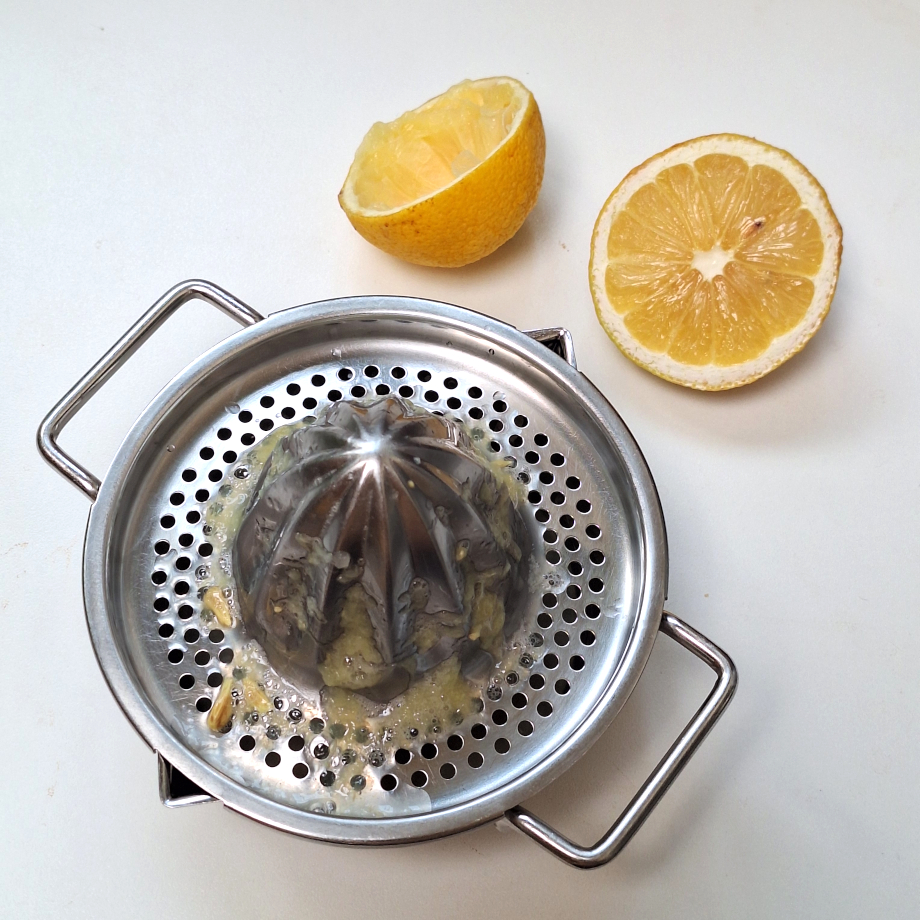
- The juice of half or a whole lemon (to taste)
- A pinch of salt (iodised sea salt, herb salt or Himalayan salt, to taste)
In Belgium, you can find organic silken tofu on the market in 400 g packs (De Hobbit or Taifun) or in small 300 g cartons (Clearspring). The protein content varies quite significantly, so this isn’t a recipe that requires very precise quantities. Experiment with the different varieties according to your taste and preference.
Silken tofu can also be found in Asian supermarkets, but it is not usually organic there.
Here’s how to proceed:
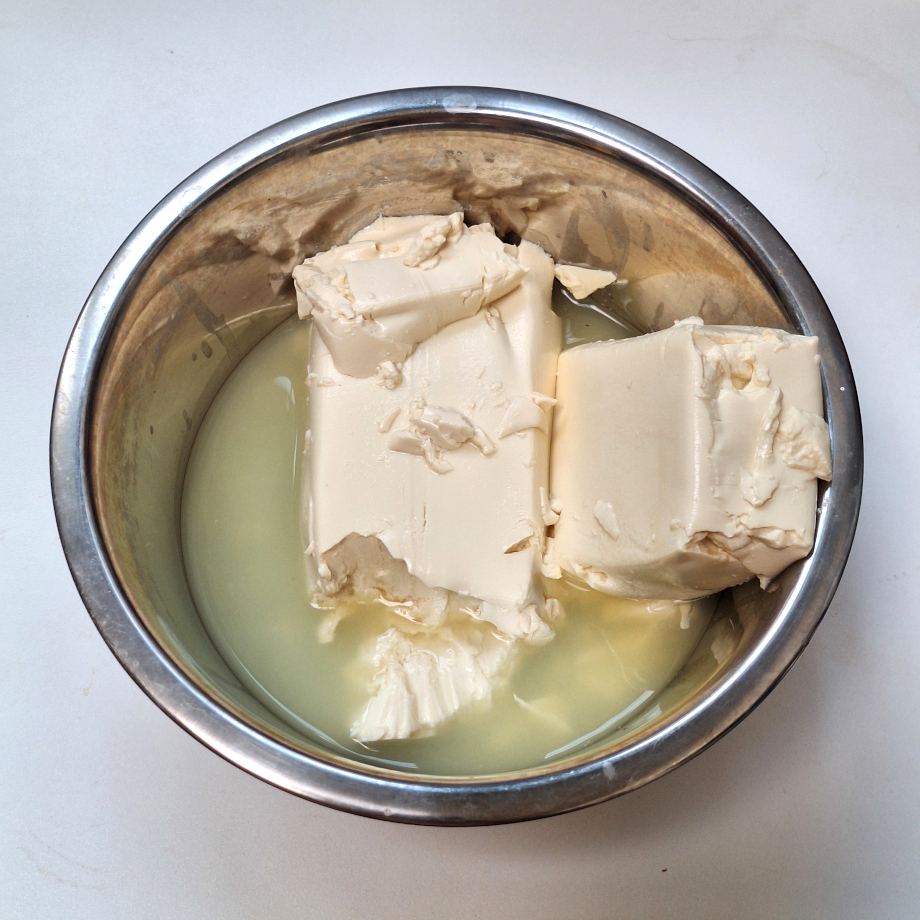
- Place the silken tofu in the bowl of a food processor after draining off the excess water.
- Add the salt and lemon juice.
- Blend in the food processor until smooth.
- Taste and add a little more lemon or salt if necessary.
This fresh plant-based cheese will keep in the fridge for about 5 days.
It can also serve as a starting point for all sorts of delicious variations.
Tip for the texture
- If you want a fairly smooth and creamy texture, blend the silken tofu in a food processor as described above.
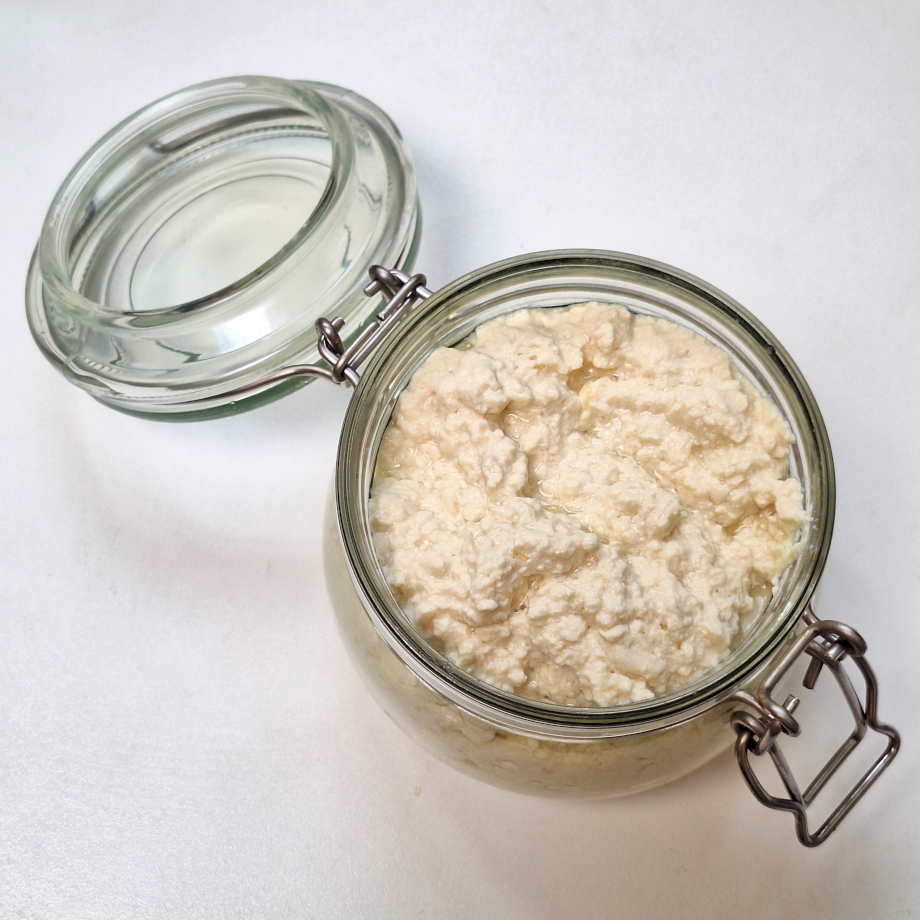
- For a firmer and slightly crumbly texture, similar to fresh cottage cheese, you’ll need to take a different approach. First, leave the silken tofu to drain for a little longer in a fine sieve. Then add the lemon and salt and mix everything together roughly with a fork.
Store bought or home made?
There are also a few plant-based fresh cheese substitutes available on the market in Belgium, even in some supermarkets. The organic versions, from brands such as Provamel, are hard to find in organic shops and supermarkets, which still give clear priority to (organic) animal-based dairy products. What’s more, I’ve noticed that they tend to disappear from the shelves quite quickly because they don’t sell well enough.
Alpro’s classic fresh cheese substitute from the high-street supermarkets (Alpro Greek Style) in its ‘plain’ version contains no fewer than 14 ingredients, including sugar (!) and a trio of preservatives to ensure it has a long shelf life. When I eat this one, my palate reacts with strong aversion.
Why not animal dairy?
Current methods of producing animal-based dairy products are highly environmentally damaging and wasteful of resources. Moreover, they are based on the ruthless exploitation of animals. Newborn calves, kids and buffalo calves are immediately taken away from their mothers because their milk is stolen for human consumption. It is a painful cycle of forced insemination, forced calving and repeated severing of the maternal bond that the mother animals are forced to endure time and time again. Until, after repeated pregnancies and producing thousands upon thousands of litres of milk, they are sent to the abattoir. I find this incredibly cruel and no longer befitting our current state of civilisation.
What’s more, milk is often portrayed as being much healthier than it actually is. Dairy products promote inflammation and are suspected of contributing to certain cancers. The whole idea that you need animal-based dairy products for the calcium they contain is also a marketing myth. The fact that adults still drink breast milk from another species is completely absurd.
Food technology is evolving at breakneck speed, and it looks as though the entire traditional dairy sector is gradually set to disappear. Anyone who still wishes to eat animal-based cheeses and other dairy products in the future can be sure that, in the near future, these will be produced using fermentation processes in tanks. This will be achieved using a limited quantity of animal stem cells or substances. Animals will finally be freed from the bondage of dairy production and exploitation by humans.