Tag: plant-based

  • Oatmeal with chia

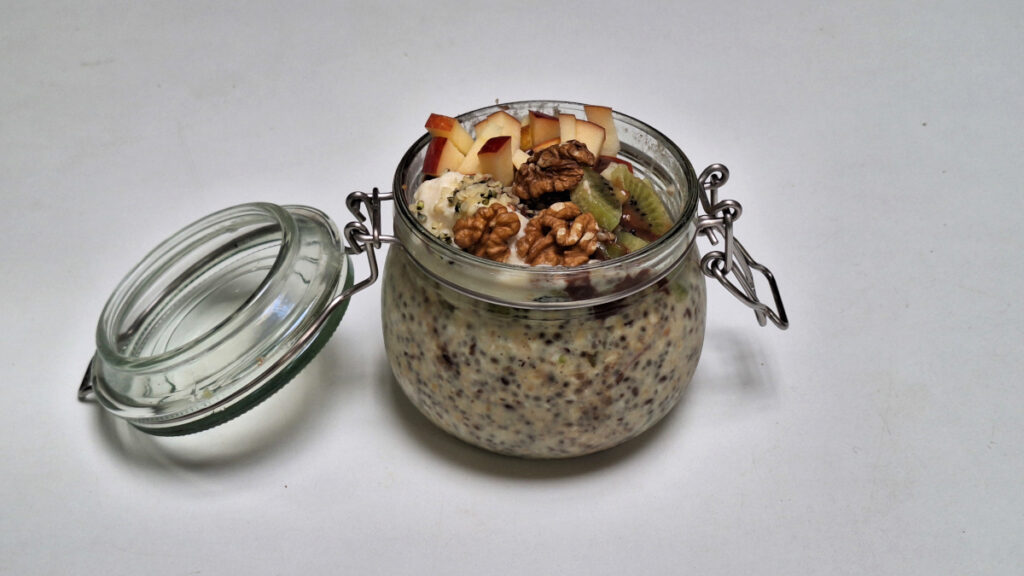
    Now here’s a truly healthy and wholesome breakfast, even for lazy people. The great thing about it is that all the ingredients are raw. You don’t need to heat anything up or cook anything. Just mix a few things together the night before, then chop up some fruit in the morning. That’s all.

    The result is nutritious, tasty and refreshing, perfect for the warmer months. Oatmeal can, of course, also be prepared warm during the colder months.

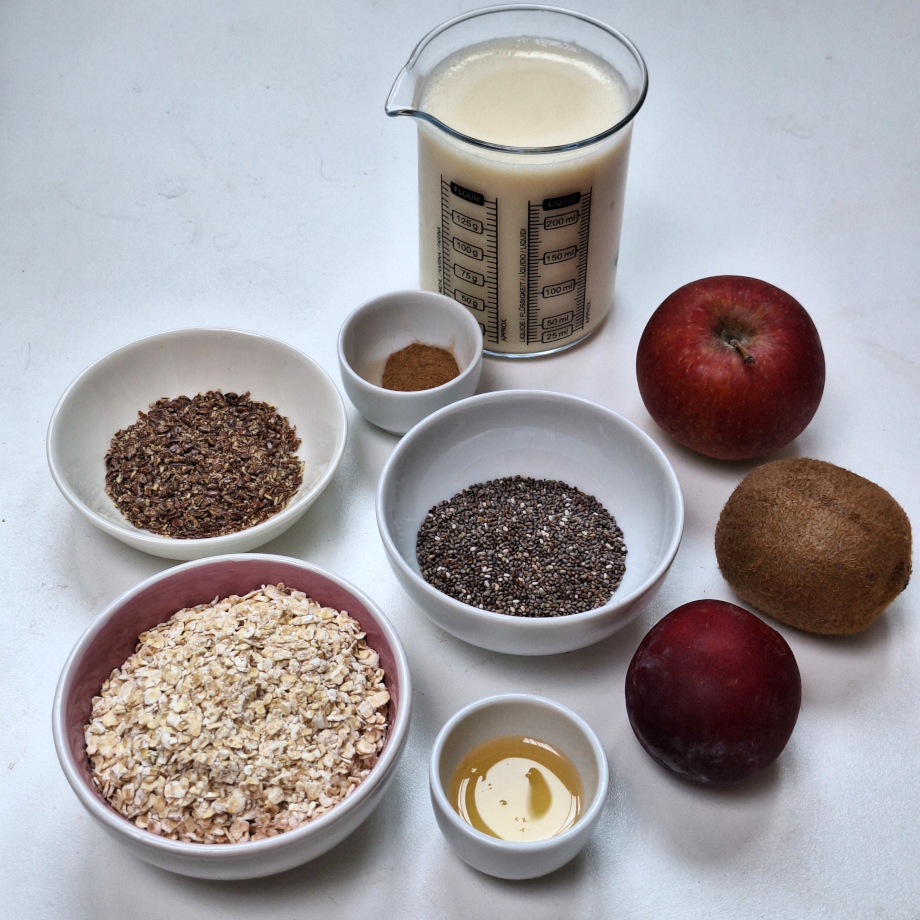
    What you’ll need for 1 portion:

    • approx. 50 g rolled oats
    • one and a half tablespoons of chia seeds
    • one tablespoon of ground flaxseed
    • approx. 250 ml plant-based milk
    • one tablespoon of agave or maple syrup
    • a pinch of iodised sea salt or herb salt
    • one teaspoon of cinnamon
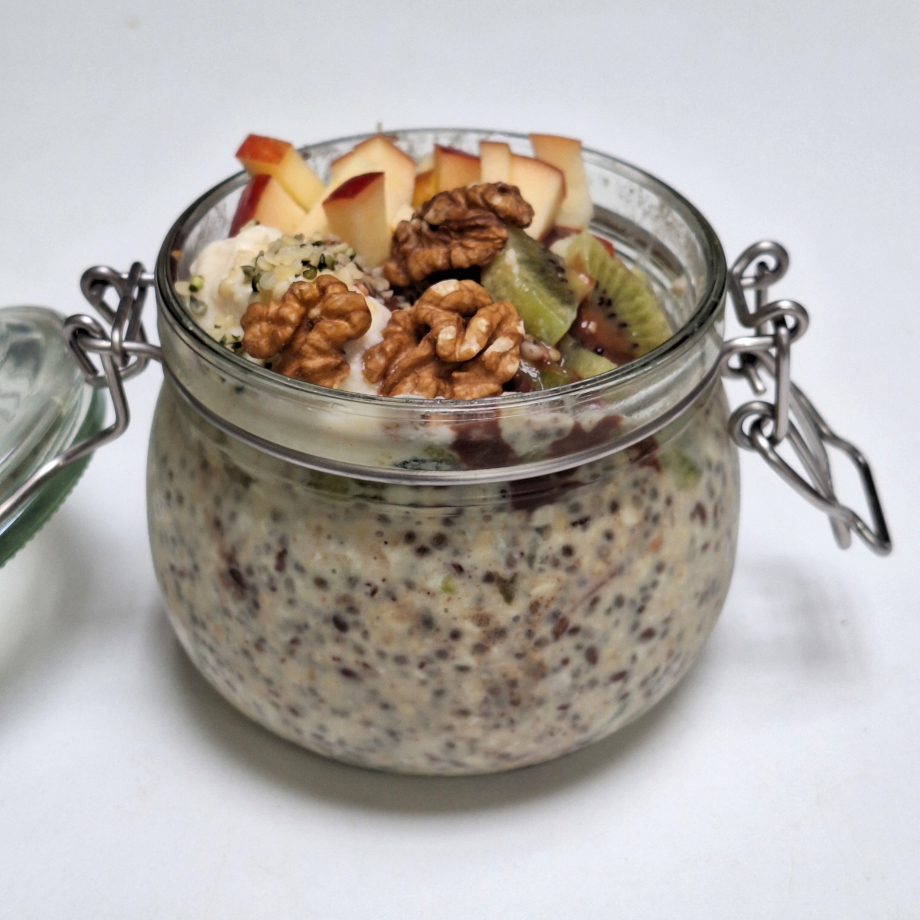
    • fruit of your choice

    Ready in a jiffy:

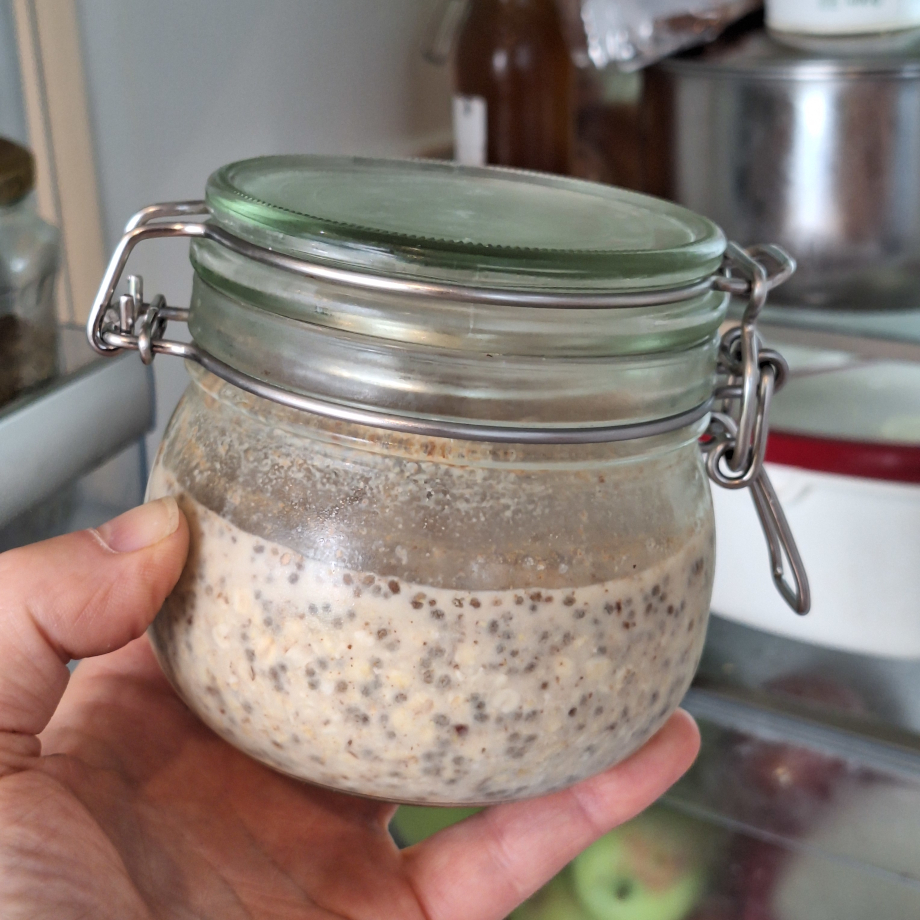
    1. Pour the rolled oats and chia seeds into a bowl, or better still into a glass jar with a lid.
    2. Pour the plant-based milk over the top and mix well. The rolled oats will swell, so make sure they’re fully submerged in the liquid.
    3. Seal the jar or cover the bowl, place it in the fridge and leave it to soak overnight.
    4. Give it a quick stir in the morning and add a little extra milk if it’s too dry.
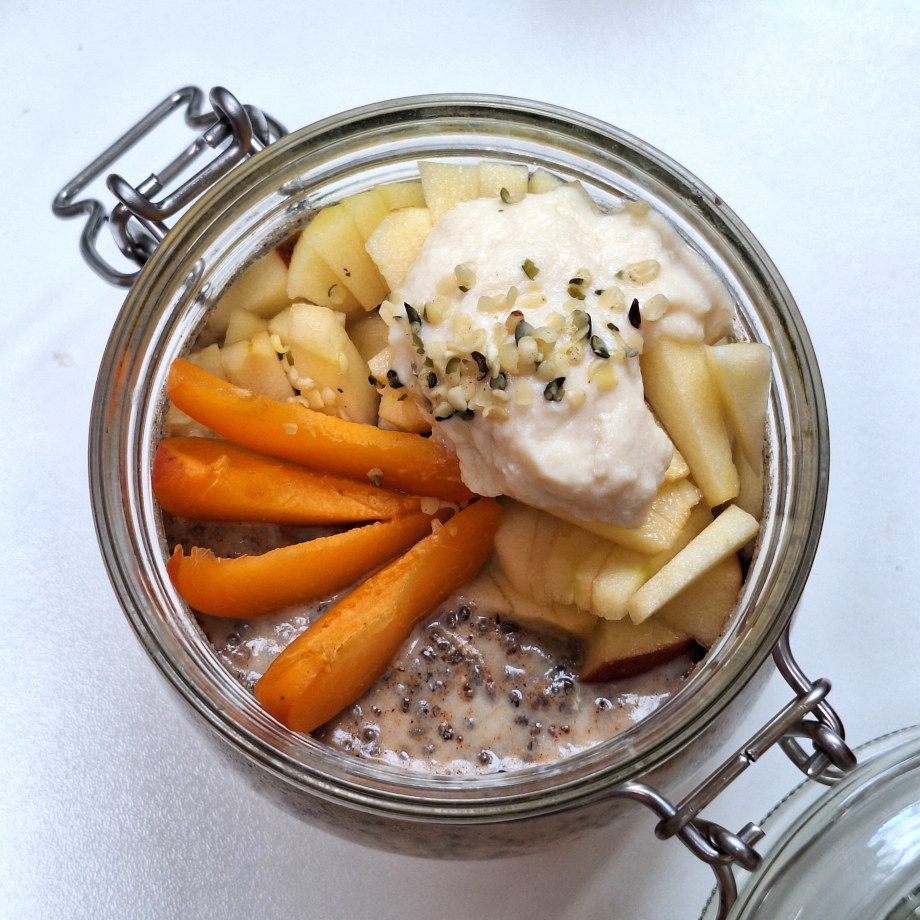
    5. Chop the fruit into pieces and mix it in. You can sprinkle some nuts on top, preferably soaked ones.

    All done.

    This breakfast contains no added sugar, has a velvety-smooth texture and a fairly neutral flavour, which really lets the fruit shine through.

    It’s guaranteed to leave you feeling full for hours.

    Enjoy!

    Even more plant-based protein

    Do you do strength training or intensive exercise? If so, you can increase the protein content. Here’s how:

    • 3 tablespoons of chia instead of one and a half
    • be sure to choose soya milk, as it’s rich in protein
    • stir in a scoop of plant-based protein powder
    • top with a generous scoop of soya yoghurt
    Which plant-based milk should I choose?

    You can choose any plant-based drink, such as soya milk, oat milk or a nut-based milk.

    Nut milk is easiest to make yourself, in the quantities that suit you.
    Of all the plant-based milk alternatives, soya milk contains the highest proportion of plant-based protein.

    Are rolled oats raw?

    Are rolled oats actually ‘raw’ in the strict sense of the word? Not really. Rolled oats are oat grains that have been flattened between rollers by machine, and this process inevitably involves some degree of heating. Hence, incidentally, the English term ‘rolled oats’. Nevertheless, this flattening process is much gentler than, for example, boiling. Grains are generally best consumed either sprouted or cooked. In this recipe, flattening and then soaking the rolled oats ensures they are easily digestible.

    What is chia and does it have any benefits?

    Chia refers to the small, white and black seeds of the plant with the Latin name Salvia hispanica. When soaked in water, they swell because they form a jelly-like coating on the outside. As a result, they are also used as an egg substitute in plant-based recipes. They are hugely popular as a “superfood”.

    But what exactly makes them so ‘super’? Well, they contain a relatively high amount of good-quality plant-based protein and are fairly easy to digest. They are also rich in fibre, omega-3 fatty acids and minerals such as calcium, phosphorus, magnesium and the trace element copper. They also contain vitamins, such as B1, B3 and a notably high amount of vitamin E.

    What is omega-3?

    This basic recipe for an oatmeal breakfast with chia contains no less than 4.4 g of omega-3 in the form of ALA.

    Omega-3 is a specific type of fatty acid. It is essential for good health. There are three forms of omega-3: ALA, DHA and EPA.

    The chia seeds and ground flaxseeds used in this recipe are excellent sources of omega-3.
    Nutritional values for chia seeds

    Chia seeds, unprocessed, per 100 g:

    EnergyCarboh.SugarFatSat. FatProteinFibreSalt
    486 kcal42,1 g0,9 g30,7 g3,8 g16,5 g34,4 g0 g

    Nutritional values for porridge with chia

    The nutritional values for 100 g of the recipe above, prepared with soya milk and agave syrup as a sweetener.

    Please note: the fruit you may add after the chilling time in the fridge has not been taken into account.

    The values are approximate:

    EnergyCarboh.SugarFatSat. FatProteinFibreSalt
    123 kcal16 g1,8 g4,5 g0,6 g5,8 g4,2 g0,05 g

    To have breakfast or not to have breakfast?

    By ‘breakfast’, I actually mean your first meal of the day. It’s open to debate whether breakfast should be eaten earlier or later in the day.

    A lot depends on your daily activities and schedule. I used to tend to tuck in quite quickly in the morning, but now it sometimes happens that I don’t eat my first meal until 10 o’clock, 11 o’clock or even later. After all, it is important to allow your digestive system sufficient rest periods, at least 8, or even 16 hours a day. This gives your body time to assimilate the food after digestion and eliminate waste products.

    Avoid constant eating

    Many problems with overeating and being overweight stem from the fact that we constantly stuff ourselves from morning till night. Advertising and marketing constantly try to tempt us into doing so. However, satisfying hunger is something completely different from being addicted to the feeling of a full stomach.
  • Fig and ginger biscuits

    You really don’t need eggs or dairy products for a healthy sweet treat!

    Supermarket shelves are full of unhealthy, highly processed biscuits packed with dubious ingredients. And 99 per cent of biscuits contain dairy derivatives and/or eggs.

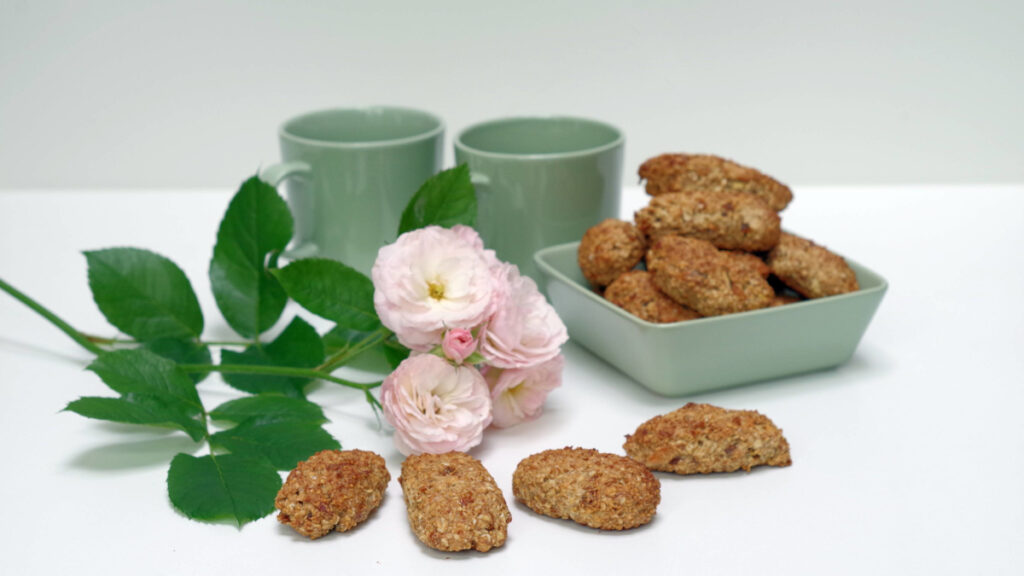
    With these homemade, super-healthy vegan fig and ginger biscuits, we’re taking the chickens and cows out of the production chain whilst looking after ourselves, our health and our environment.

    Because quite apart from the systematic cruelty suffered by farm animals, food of animal origin also has an ecological footprint that is many times higher than plant-based food.

    The ingredients for these biscuits (approx. 15 pieces):

    Liquid:

    • 2 tablespoons almond butter
    • 100 ml soya milk
    • 2 tablespoons agave syrup, maple syrup or rice syrup

    Dry:

    • a generous piece of fresh ginger (10–15 g)
    • 70 g dried figs
    • approx. 30 g almonds
    • 100 g rolled oats
    • 50 g wholemeal flour (wheat, rye or spelt)
    • 1 teaspoon baking powder

    Here’s how to make them step by step:

    1. Peel the ginger and chop it finely. Chop the figs into small pieces too.
    2. Coarsely chop the almonds.
    3. Put all the dry ingredients into a bowl and add the baking powder.
    4. Mix the dry ingredients together.
    5. Put the liquid ingredients into a sealable jug and shake or blend them well.
    6. Pour the liquid ingredients into the dry ingredients.
    7. Mix everything together with a fork to form a firm dough.
    8. Shape into about fifteen biscuits and place them on a sheet of baking paper on a baking tray.
    9. Bake for 10 minutes at 200°C, then reduce the temperature to 160°C and bake for a further 15 to 20 minutes. They’ll come out of the oven a light golden brown.
    10. Enjoy!

    These biscuits are very nutritious and healthy, but they do contain quite a few calories!

    So enjoy them in moderation if you’re trying to lose weight.

    Fig and ginger biscuits, per 100 g of product:

    The values are approximate.

    Energy
    Carboh.
    SugarsFatSat. fatProteinFibreSalt
    227 kcal9,8 g1,1 g15,5 g11,2 g13,7 g3,0 g0,13 g

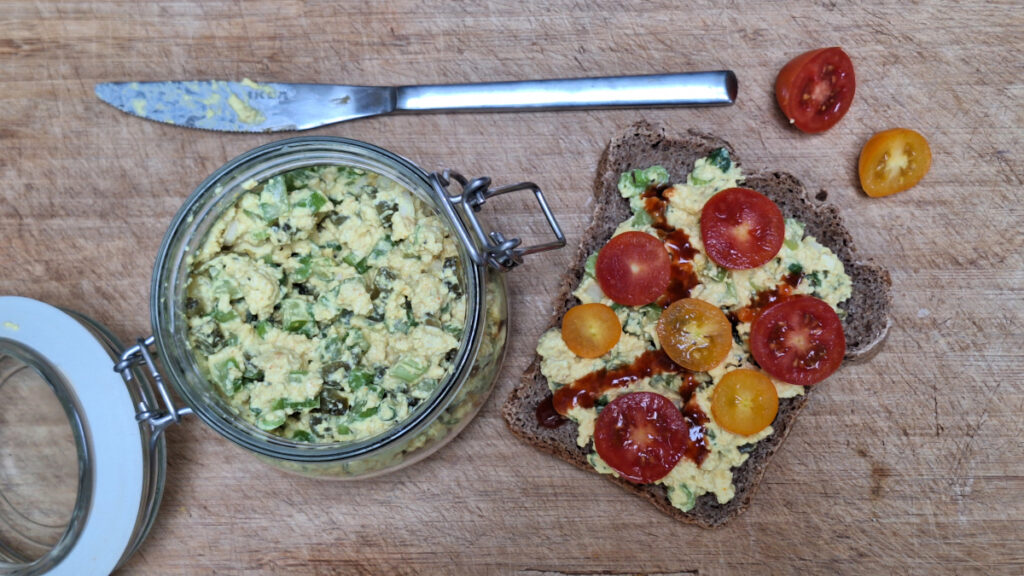
  • High-protein tofu salad

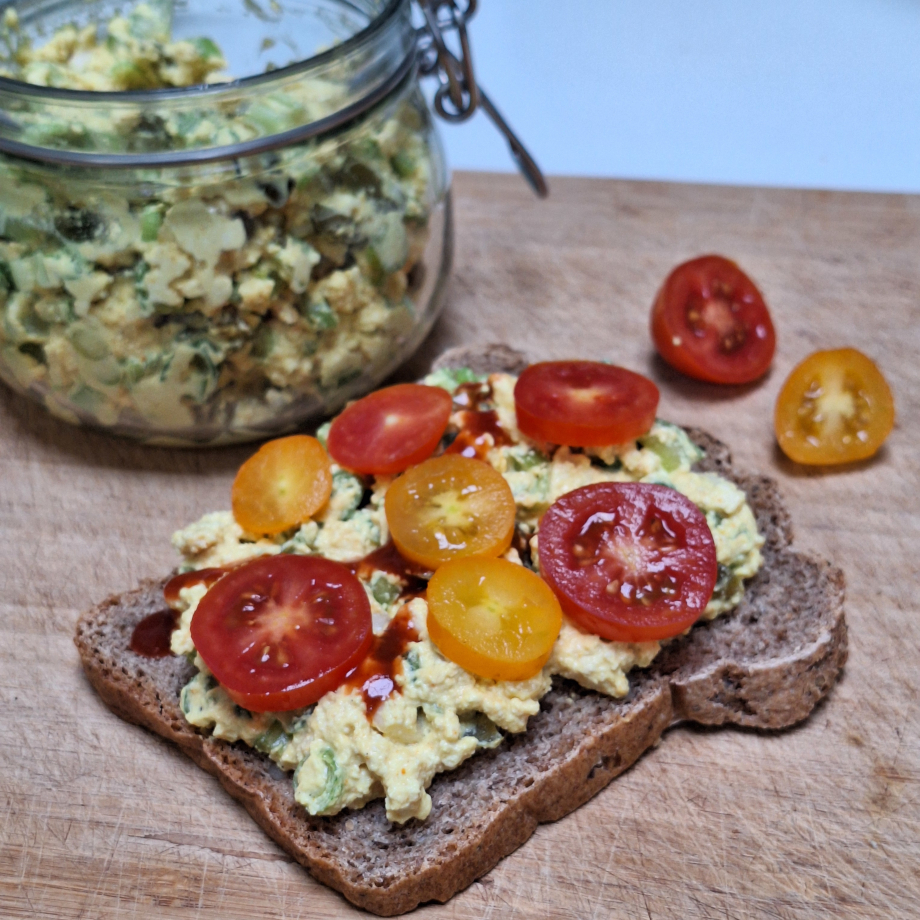
    This salad is a lovely and much healthier alternative to traditional egg salad. Why that is so you will be able to read below the recipe.

    Delicious on wholemeal bread, wholemeal toast or multigrain crackers.

    Ingredients:

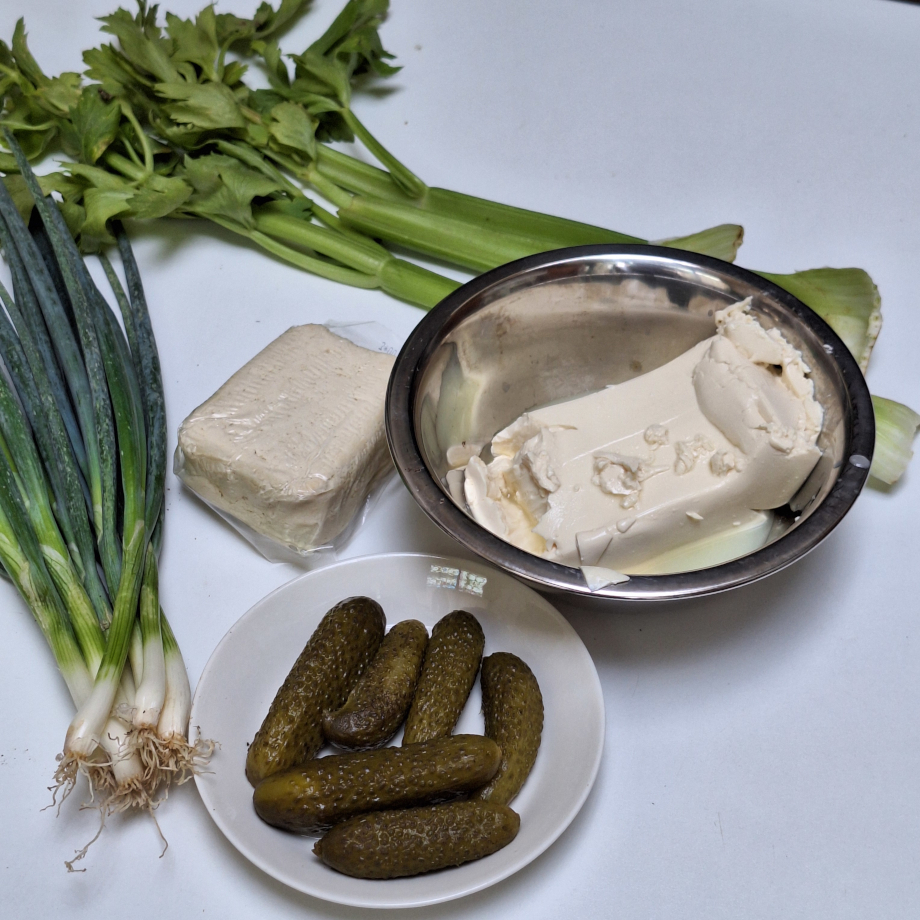
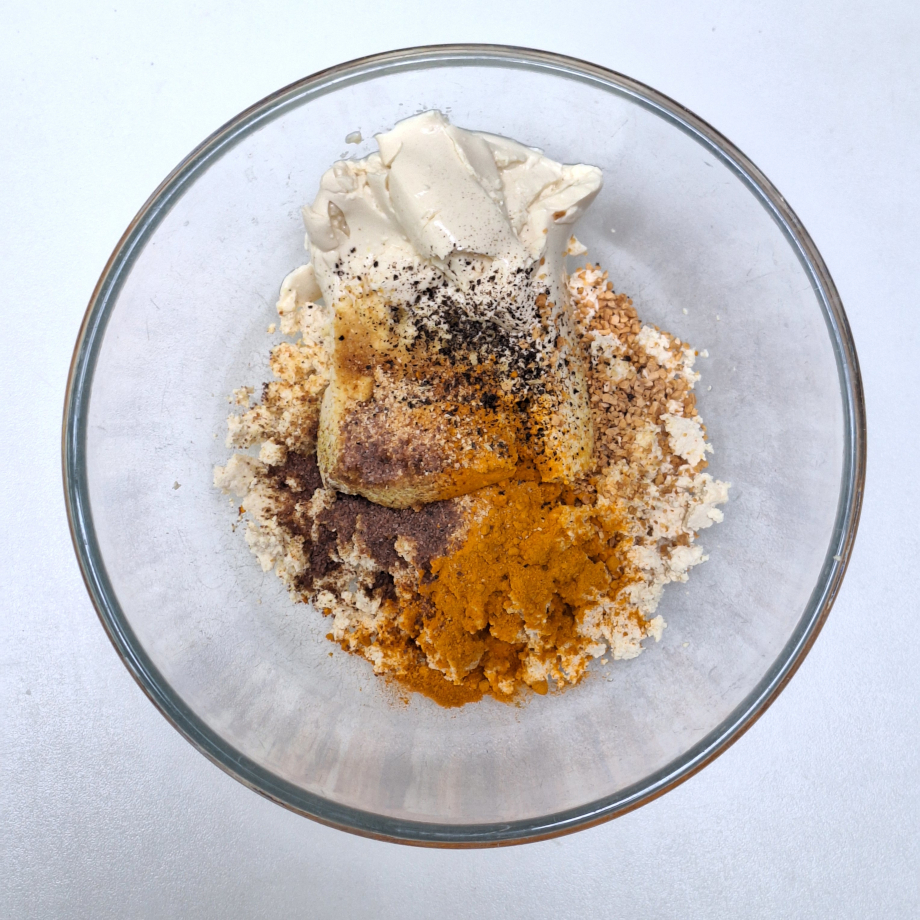
    • 200 to 250 g firm tofu
    • 250 to 350 g silken tofu
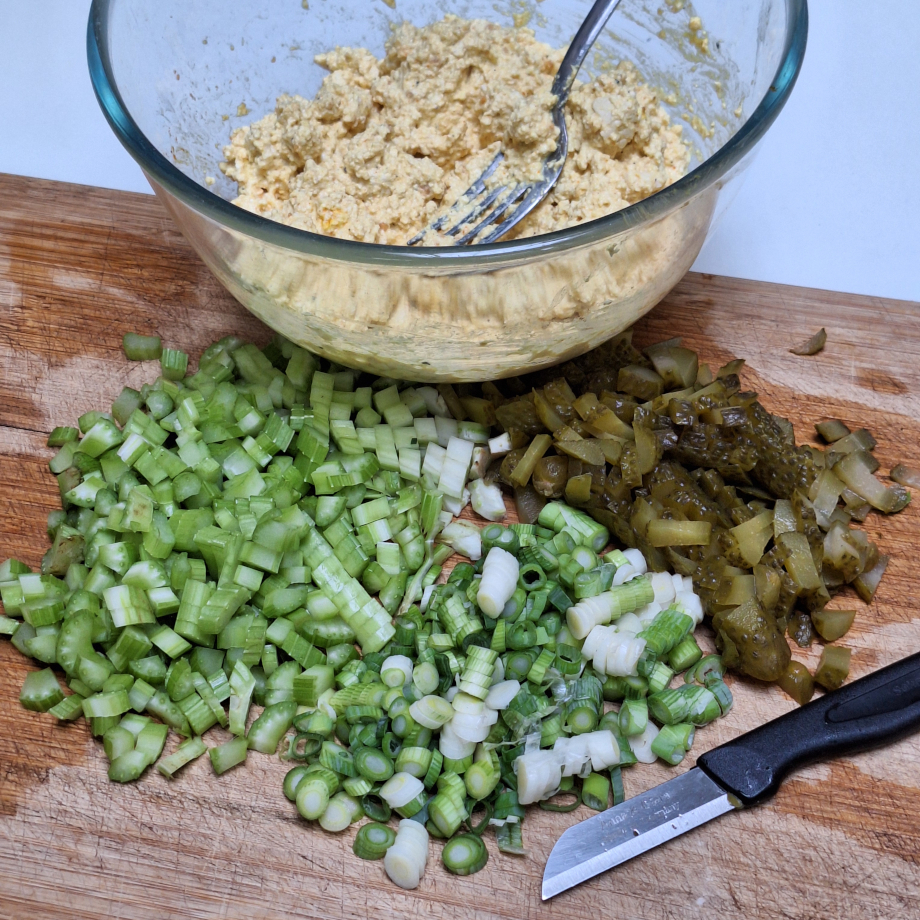
    • a bunch of spring onions or a small yellow or red onion
    • 5 to 6 pickled gherkins, from a jar
    • 2 up to 3 stalks of green or white celery
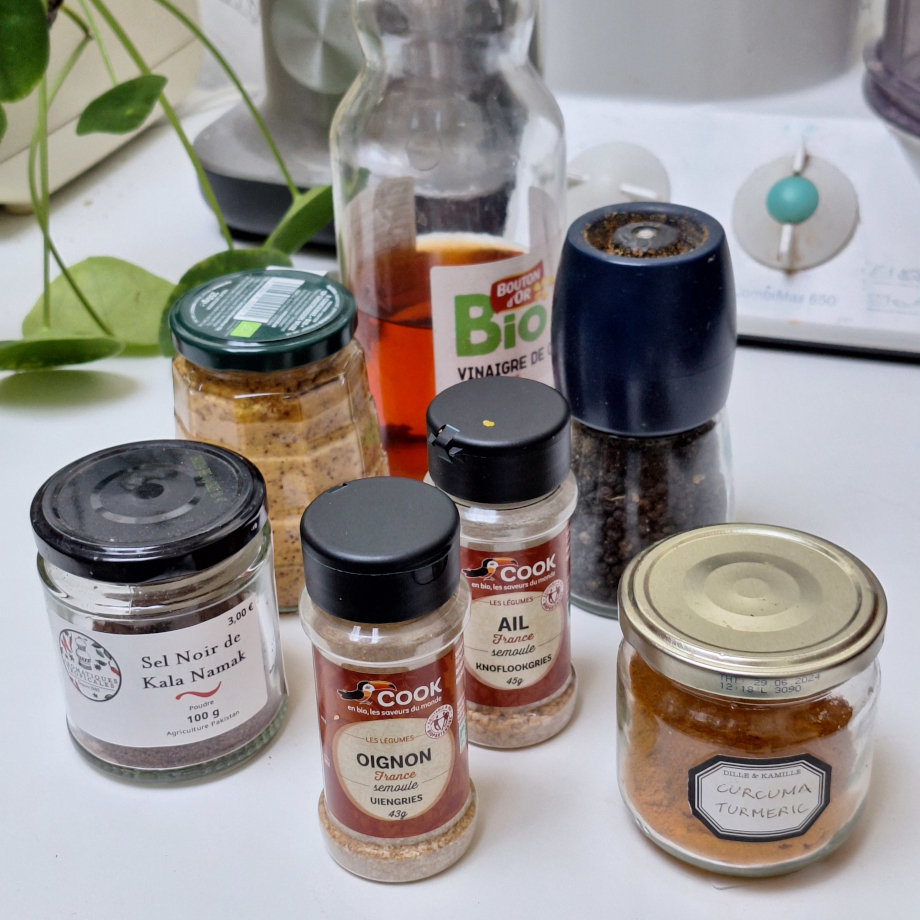
    • a teaspoon of turmeric
    • onion powder or onion flakes, one teaspoon
    • a teaspoon of garlic powder
    • half to a full teaspoon of kala namak salt or herb salt
    • a generous amount of black pepper to taste
    • a teaspoon of mustard
    • one to two teaspoons of cider vinegar
    • fresh green herbs such as dill or parsley, if desired

    Here is how you fix this:

    This salad is really quick to make.

    1. Finely chop the spring onion, celery, gherkins and fresh herbs.
    2. Break up or mash the firm tofu with a fork, then mix it with the silken tofu.
    3. Add all the spices, salt and pepper to the tofu and mix well.
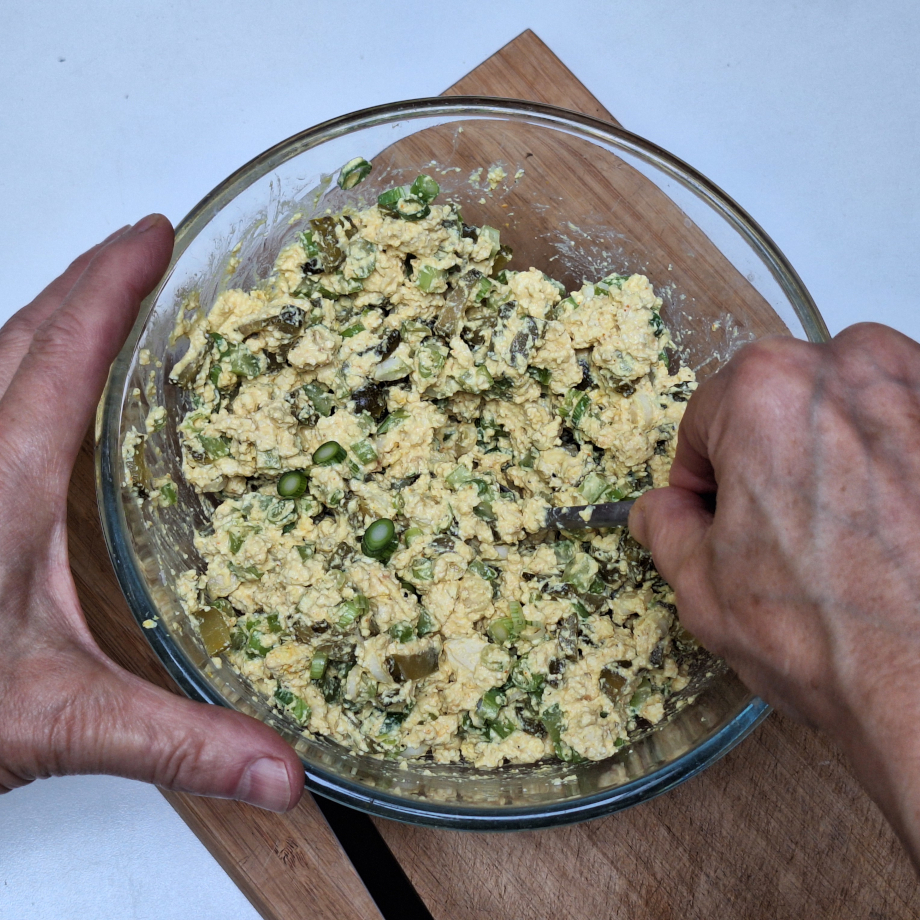
    4. Add the chopped vegetables and fresh herbs and mix well.
    5. Transfer to one or more sealable glass containers.

    And that’s it!

    Tip: You can also simply use iodised sea salt, herb salt or Himalayan salt instead of kala namak. Kala namak is a mineral salt from Asia that has a sulphurous aroma strongly reminiscent of the taste of boiled eggs. This light, protein-rich and healthy salad will keep for up to a week in the fridge in a sealed container. It tastes exceptionally delicious and refreshing during the warmer months.

    The typical lunch in many companies

    In Belgium, many people who are at work during the day eat a lunch of filled rolls.

    Even when companies organise lunch meetings, rolls or sandwiches are often provided. These rolls or sandwiches are traditionally filled with one of the following:

    • ham
    • cheese
    • ham and cheese
    • américain (strongly spiced raw beef)
    • mayonnaise-based salads, such as: fish salad, tuna salad, egg salad, meat salad, chicken salad and so on

    What exactly is wrong with these salads?

    The mayonnaise-based salads available in shops and in the catering sector leave a great deal to be desired in terms of quality and health. To cut costs, it is mainly salted and seasoned mayonnaise that is served, whilst the other ingredients of animal origin are kept to a minimum. So you often find yourself faced with a sea of mayonnaise with the odd piece of meat, fish or egg floating here and there. Mayonnaise is made from eggs and vegetable oil. As a result, it is very high in calories and cholesterol, whilst being low in nutrients with real nutritional value.

    Why eat fewer eggs?

    When I myself made the transition from omnivore to a fully plant-based diet, eggs were pretty much the last thing I cut out of my diet. I did enjoy omelettes and fried eggs, but I was far less keen on (hard) boiled eggs. Eggs seemed completely harmless to me, because you don’t have to kill an animal for them. Until I started to look into the matter in more depth, including taking a peek behind the scenes of the egg industry.

    We take it for granted that a hen will lay about one egg a day in 2026. Yet hens have been selectively bred for this purpose for a century. Because around 1915, a hen laid an average of only about 25 eggs … per year! And that’s understandable. No female animal reproduces non-stop throughout her entire life. It simply follows the seasons, with long periods during which the organism rests.

    An exhausting feat of strength

    It’s just that we humans have, as it were, ‘converted’ the laying hen and bred it into an egg-laying machine. If you consider the nutritional value and the raw materials that make up a chicken’s egg, it is an enormous, exhausting feat of strength for such a frail bird to produce one every day. Just think of the large amount of proteins, fats and minerals (such as the calcium in the eggshell) that make up an egg.

    If only we, as humans, could at least show – let alone feel – a modicum of gratitude for the gift of such an egg … But no. The average laying hen – or rather, ‘egg-laying machine’ – spends her miserable existence in the hell of an intensive poultry farm (a battery cage).

    Ethically and ecologically irresponsible

    There she sits, crammed together with her fellow sufferers in a tiny space, amidst the stench of droppings and the noise, whilst the artificial light never goes out. She has no freedom or space whatsoever to display normal chicken behaviour, such as spreading her wings or taking dust baths in sand.

    After about a year and a half, she is inexorably sent to the abattoir, where her life is brutally cut short. And this despite the fact that a hen can normally live for up to 18 years. That is, ethically speaking, totally wrong. A living creature reduced to less than a production machine.

    Who fancies an egg now? I certainly don’t anymore.

    Even those who focus solely on figures will still have to admit that the environmental impact of chicken farming is still considerably greater than that of producing plant-based protein sources. Take beans, for example.

    Fork Ranger and the hard data

    What is true, however, is that the ecological footprint (water consumption, energy consumption, CO₂ emissions) of chicken farming is much lower than that of cattle farming. So, for those who don’t want to give up meat but are considering cutting down on it: put that beef aside and opt for chicken instead of beef or other ruminant mammals such as sheep, buffalo or goat.

    An interesting source of information on the environmental impact of reducing meat and other animal products can be found at Fork Ranger. They have a website, an app and a number of multilingual publications, such as a cookbook and a seasonal calendar. However, these guys and girls couldn’t care less about animal welfare. They’re just cool number-crunchers. Still, they help put certain things into perspective and debunk false myths. As a result, their approach also helps to convince people and thus reduce meat consumption. Every little bit helps.