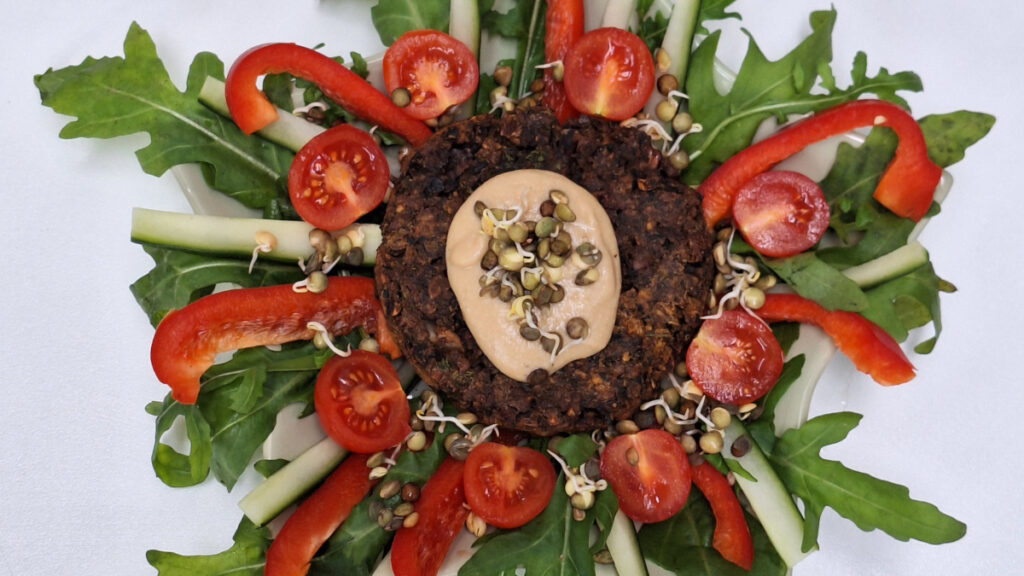
A real winner in terms of taste and health among veggie burgers
As far as I’m concerned, this is one of the most successful recipes for a plant-based burger. The main ingredients are: beetroot, with chickpeas, oat flakes and sesame paste as sources of protein.
Ingredients for 4 up to 6 burgers:
- approx. 250 g cooked chickpeas (or from a jar or tin)
- 1 red onion, finely chopped
- 1 tablespoon coconut oil (or 1 tablespoon olive oil)
- 2 cloves of garlic, finely chopped
- 1 raw beetroot, grated
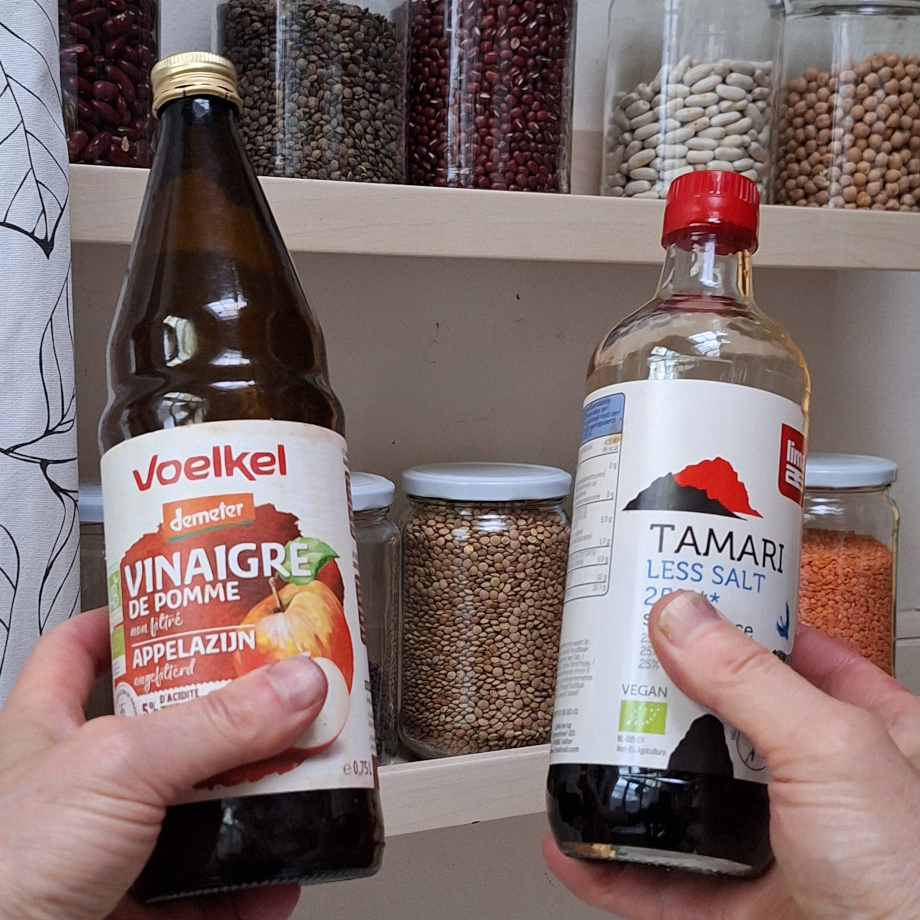
- 1 tablespoon cider vinegar
- 2 tablespoons tahini (sesame paste)
- 1 to 1½ tablespoons tamari (soya sauce)
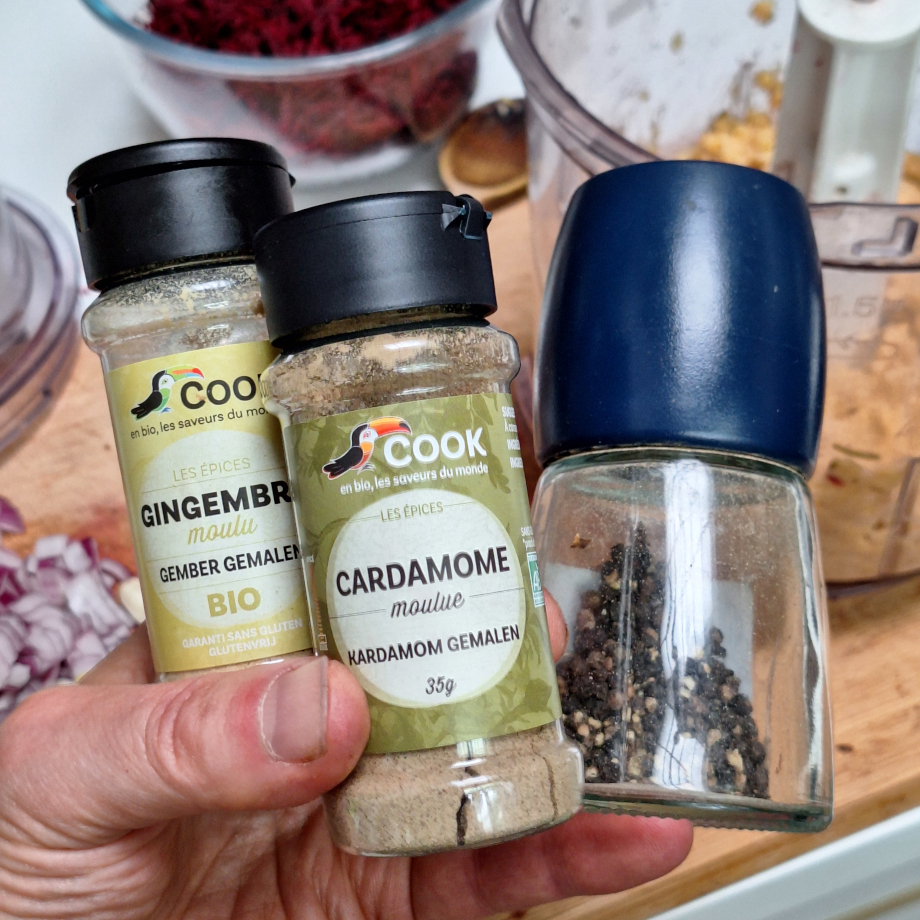
- ginger powder, 1 to 1½ teaspoons
- ground cardamom, 1 to 1½ teaspoons
- black pepper, a generous amount
- 4 to 6 tablespoons rolled oats
- extra salt, if required, to taste
If you prefer to cook with as little oil as possible, use approx. 100 to 150 ml vegetable stock instead of the coconut or olive oil.
Method:
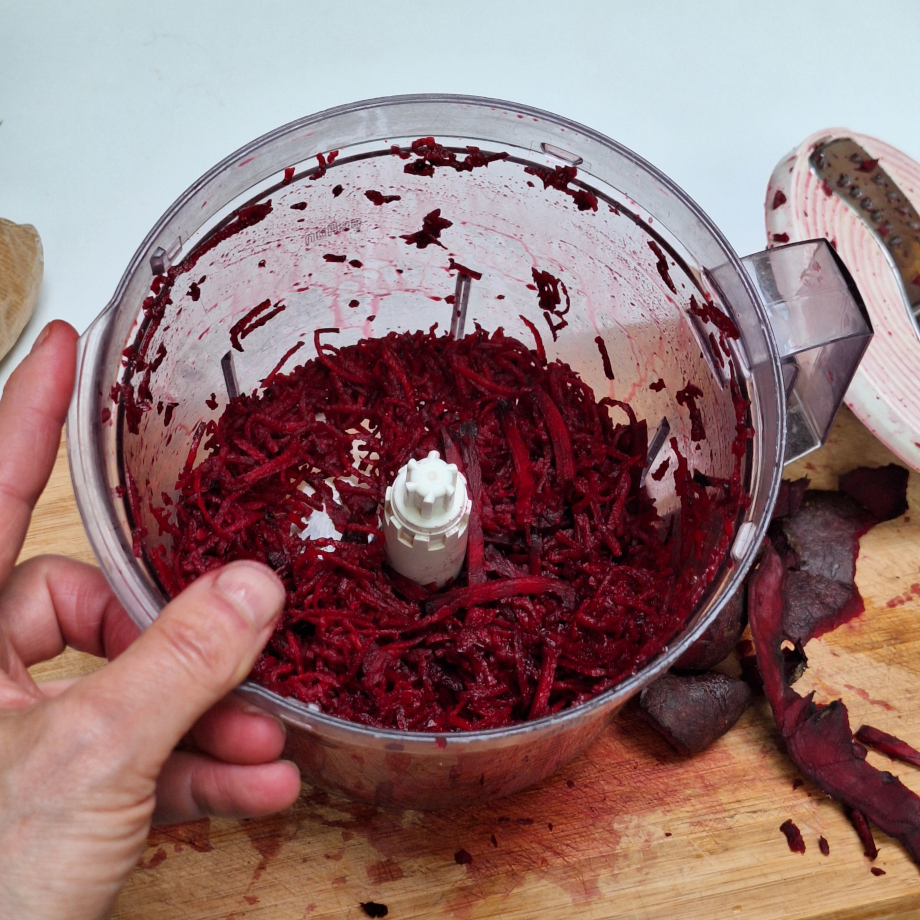
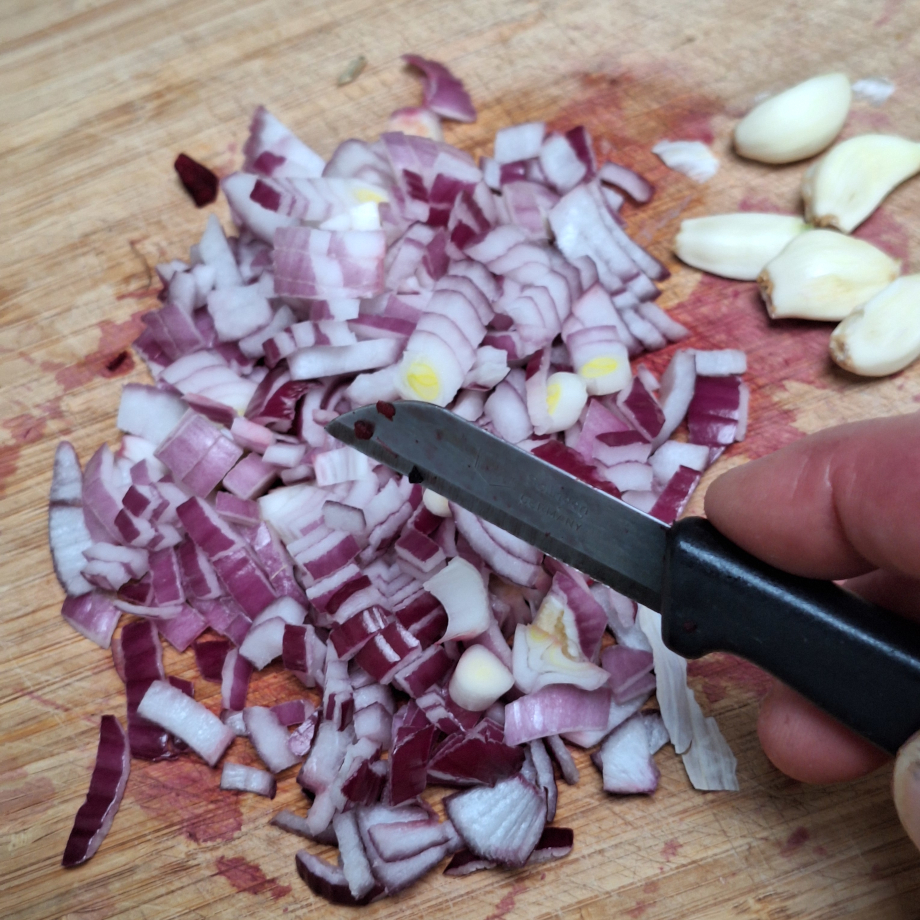
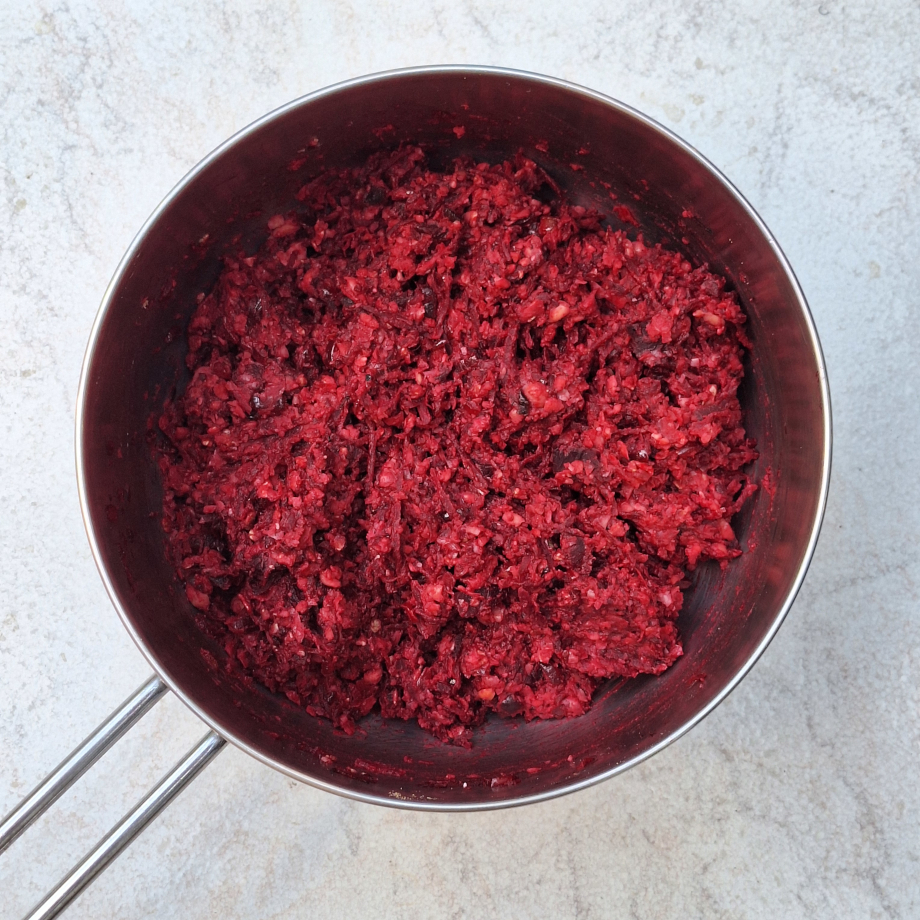
- Finely chop the onion and garlic cloves and grate the beetroot.
- Do you have a conventional oven? Preheat it to 190–200°C (not necessary for a fan oven).
- Coarsely grind or mash the cooked chickpeas.
- Melt the (coconut) oil or pour the vegetable stock into a pan, then fry the chopped onion and garlic until they are slightly translucent.
- Add the grated beetroot, along with the cider vinegar, tamari and the herbs.
- Stir-fry or simmer for about 6 minutes over a low heat.
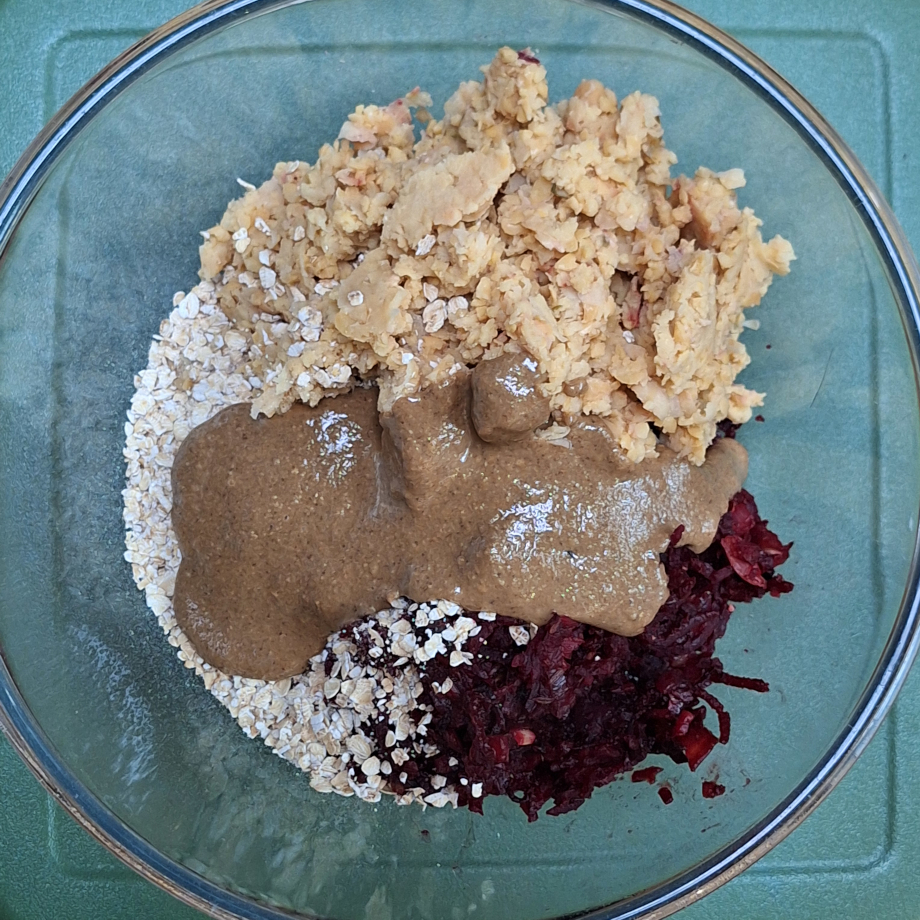
- Take a large bowl, add the contents of the pan along with the chickpeas, the tahini and the rolled oats. Mix well until you have a coarse, sticky mixture. Taste and add extra salt or pepper if needed.
- If the mixture is too wet: add extra rolled oats.
- Line a baking tray with baking paper.
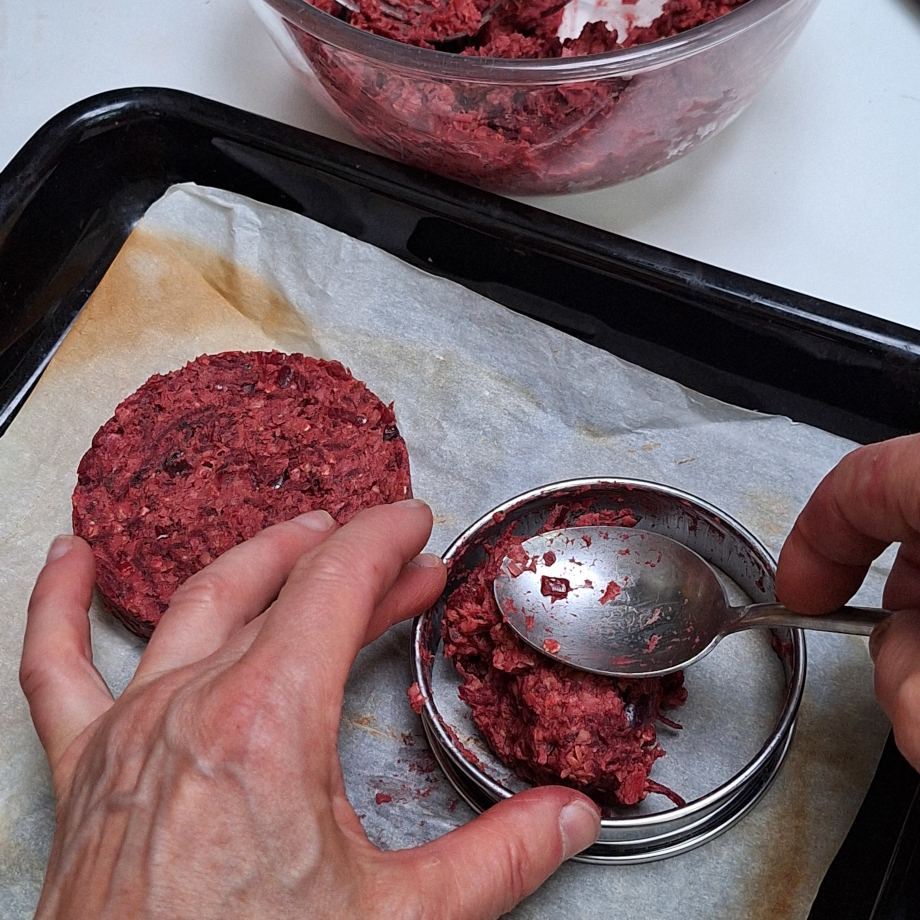
- Shape into 4 to 6 burgers and place them on the baking paper.
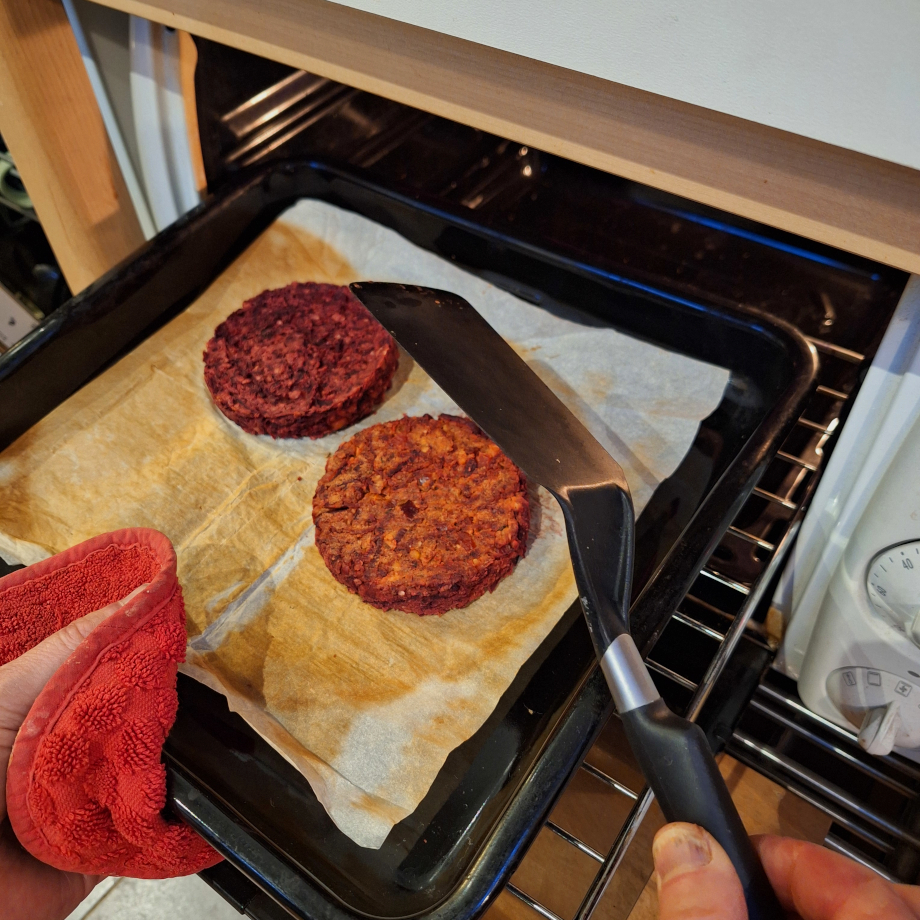
- Bake in the oven for about 35 minutes, turning them halfway through.
For neat, round burgers, you can use a metal ring to shape them.
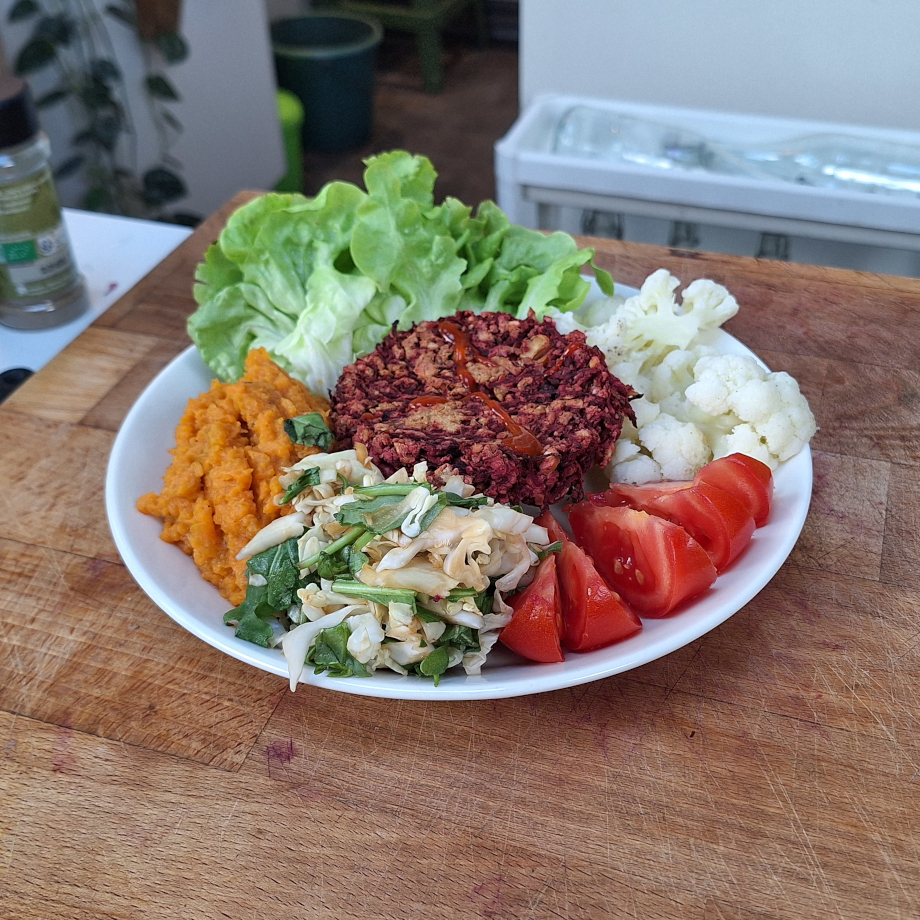
These burgers are delicious in any season. Lettuce or a salad with raw vegetables and a fresh vinaigrette go well with them.
The quantities in the recipe above are enough for 4 to 6 burgers, depending on how large and thick you shape them.
The mixture you use to make the burgers can be kept in the fridge for a week or frozen for later use.
Are these homemade burgers a proper substitute for a classic meat- or fish-based burger?
These homemade plant-based burgers contain a good amount of protein, which is also well-balanced as it combines a grain (oats) with a legume (chickpeas), along with vegetables (onion, garlic and beetroot). What’s more, these burgers are also rich in dietary fibre and other healthy compounds not found in animal products. Examples include minerals, vitamins and phytochemicals, such as the red pigment from the beetroot. The fats found in plant-based burgers are also healthier than the saturated fats in animal tissue. This depends partly on the oil you use for the recipe above. Olive oil, for example, is more highly recommended than coconut oil. The recipe can also be made using a vegetable stock as a base to simmer the beetroot until tender. This significantly reduces the fat content and also eliminates the saturated fats from the coconut oil.
Profit margin
In absolute terms, the protein content of this plant-based burger will, of course, be lower than that of a burger made from pure minced meat or fish. An additional benefit of a plant-based burger is the absence of residues of growth hormones, antibiotics and other unhealthy substances used in livestock farming to make animals grow faster and increase profit margins, at the expense of our health.
Is a plant-based burger that I buy in the supermarket a good substitute for a traditional meat or fish burger?
It all depends on the ingredients of the plant-based burger from the supermarket. Read the label. Check what’s in the burger, particularly any artificial additives used to alter the flavour, smell, colour and shelf life. The salt – and therefore sodium – content is also something to keep an eye on. The less added salt, the better.
A burger from the supermarket is more processed than one you make yourself at home using wholesome ingredients.
Processed meat has been proven to be harmful to health and has been on the World Health Organisation’s blacklist for decades. Far less research has been carried out into the health aspects of industrial or artisan plant-based burgers. However, the research that is available suggests that they are less harmful than burgers containing meat or fish.
Beetroot and chickpea burgers, nutritional value
Based on the recipe above, nutritional values per 100 g of edible product.
The values are approximate.
Calculated on the basis of 250 g of cooked chickpeas, 300 g of fresh beetroot, 100 g of red onion, 40 g of oat flakes, one tablespoon of olive oil and the specified quantities of the other ingredients.
| Energy | Carboh. | Sugars | Fat | Saturated fat | Protein | Fibre | Salt |
|---|---|---|---|---|---|---|---|
| 139 kcal | 18,7 g | 4,9 g | 5,4 g | 0,8 g | 5,3 g | 4,8 g | 0,4 g |