 Deutsch
 Français
 Nederlands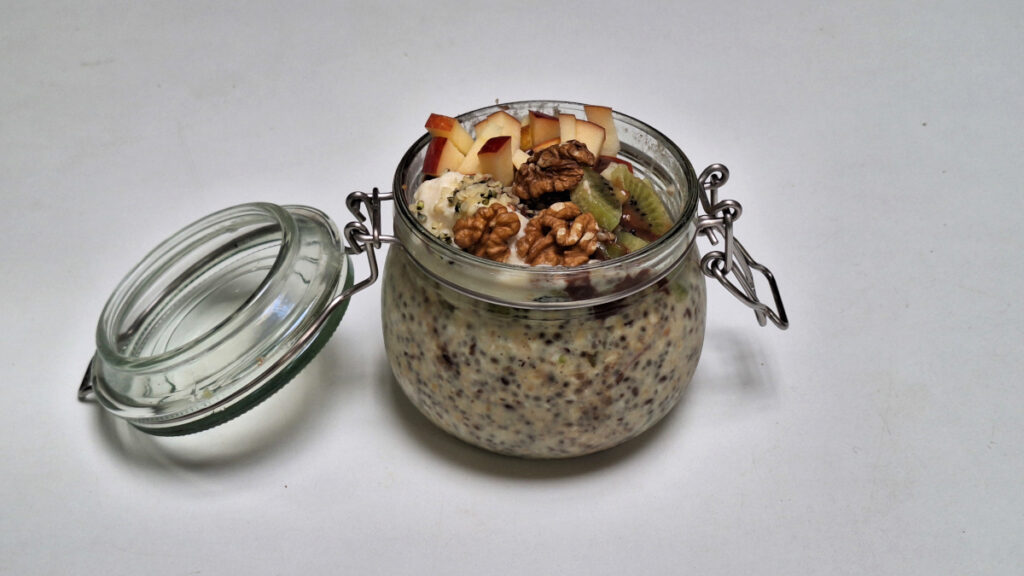
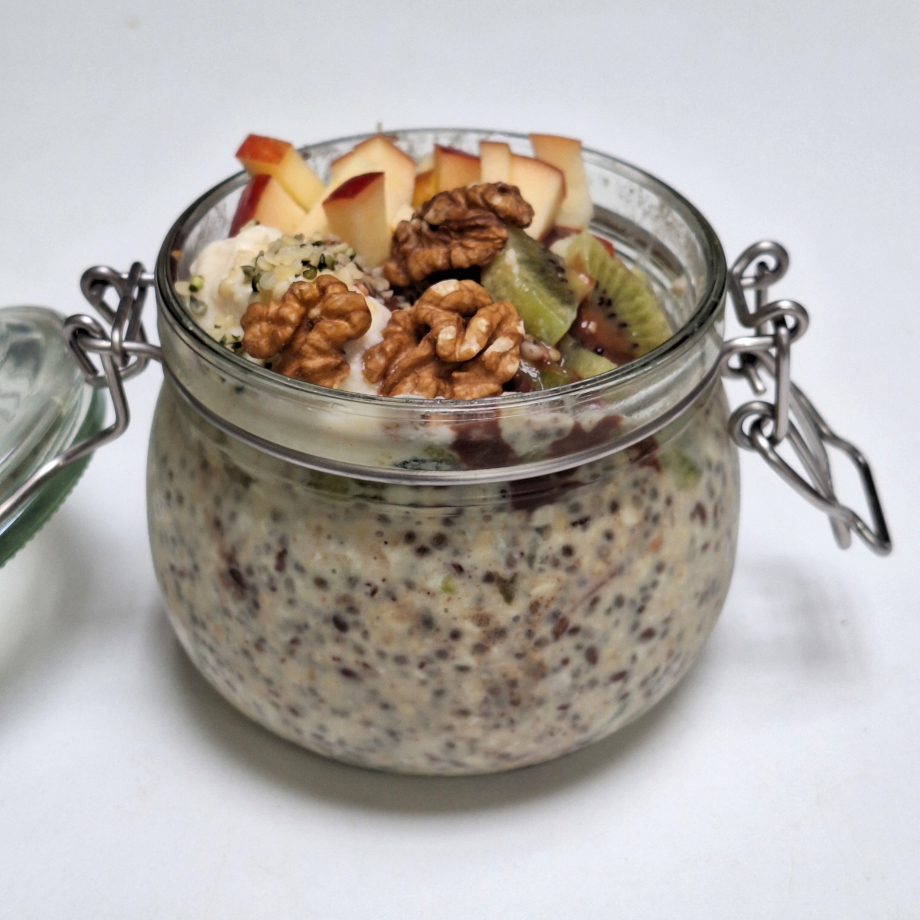
A super-healthy, no-fuss oatmeal breakfast
Now here’s a truly healthy and wholesome breakfast, even for lazy people. The great thing about it is that all the ingredients are raw. You don’t need to heat anything up or cook anything. Just mix a few things together the night before, then chop up some fruit in the morning. That’s all.
The result is nutritious, tasty and refreshing, perfect for the warmer months. Oatmeal can, of course, also be prepared warm during the colder months.
What you’ll need for 1 portion:
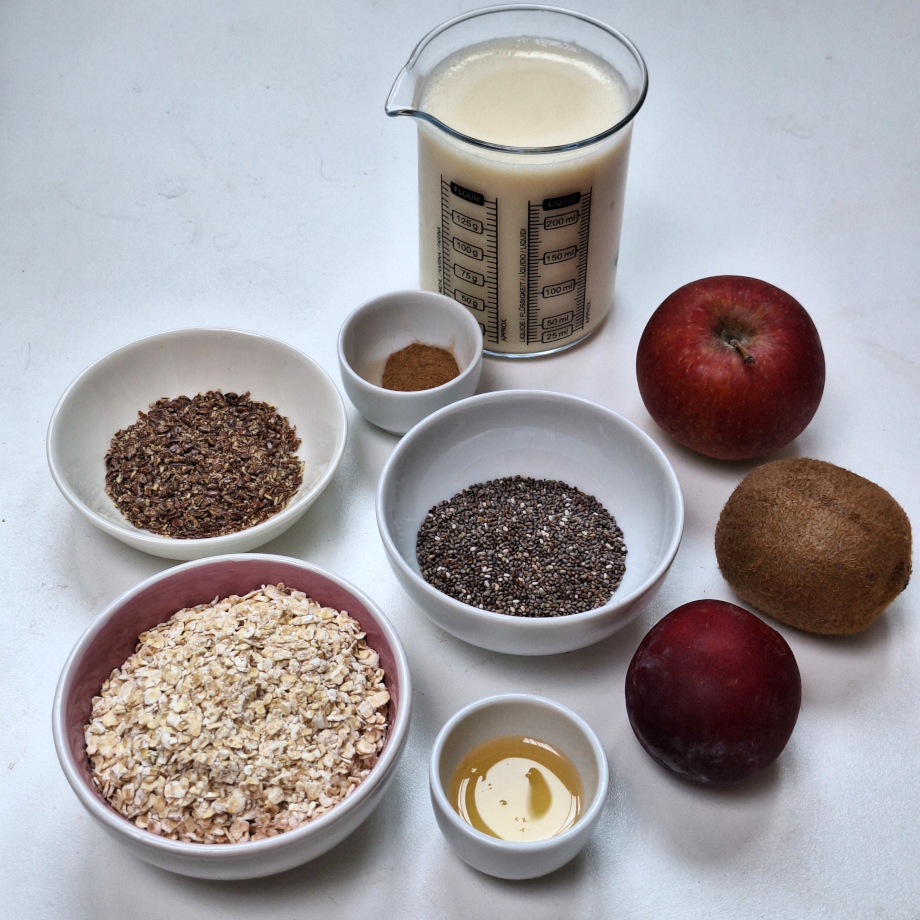
- approx. 50 g rolled oats
- one and a half tablespoons of chia seeds
- one tablespoon of ground flaxseed
- approx. 250 ml plant-based milk
- one tablespoon of agave or maple syrup
- a pinch of iodised sea salt or herb salt
- one teaspoon of cinnamon
- fruit of your choice
Ready in a jiffy:
- Pour the rolled oats and chia seeds into a bowl, or better still into a glass jar with a lid.
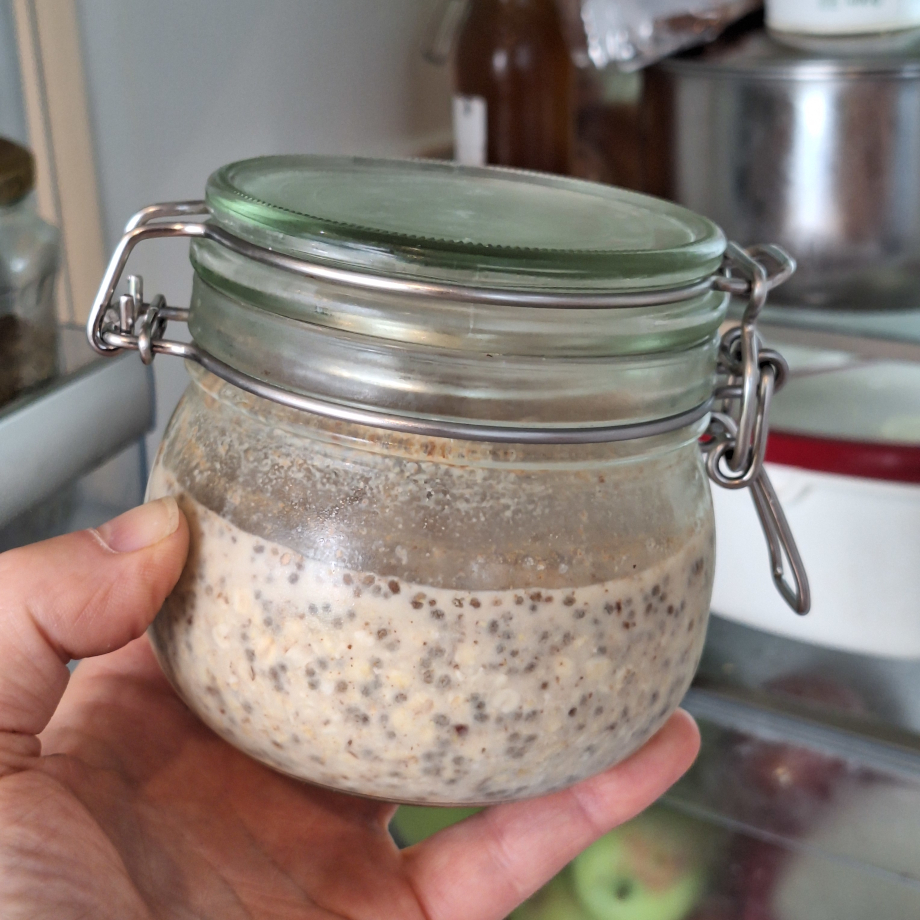
- Pour the plant-based milk over the top and mix well. The rolled oats will swell, so make sure they’re fully submerged in the liquid.
- Seal the jar or cover the bowl, place it in the fridge and leave it to soak overnight.
- Give it a quick stir in the morning and add a little extra milk if it’s too dry.
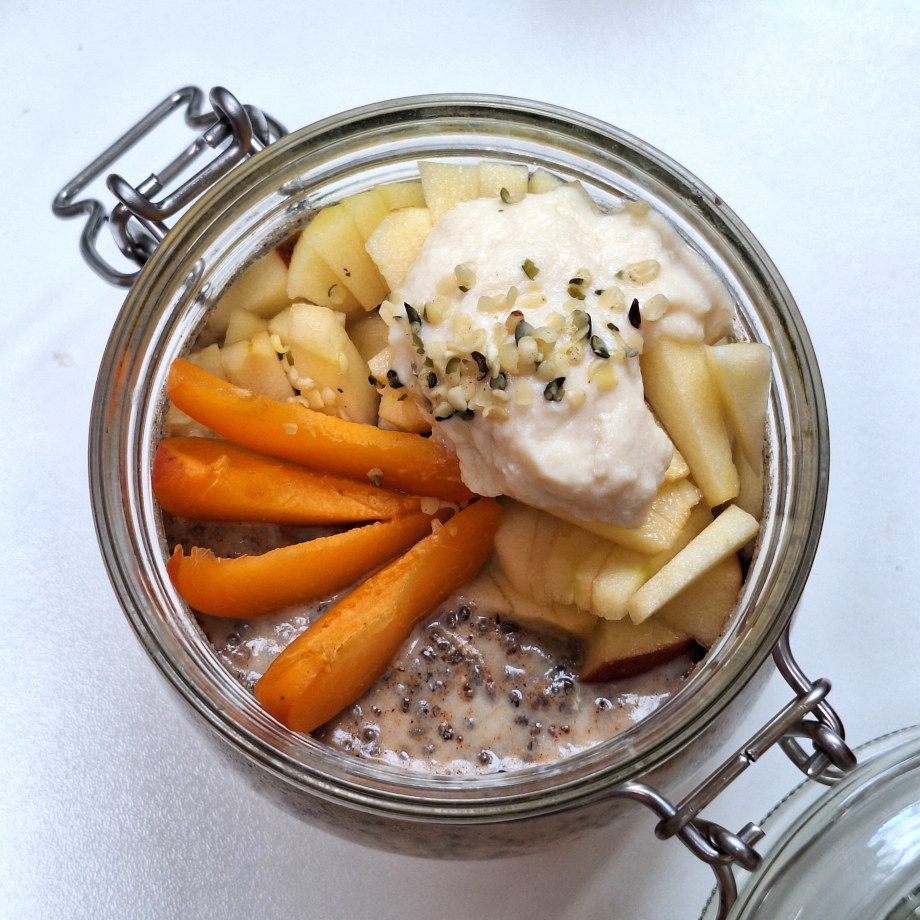
- Chop the fruit into pieces and mix it in. You can sprinkle some nuts on top, preferably soaked ones.
All done.
This breakfast contains no added sugar, has a velvety-smooth texture and a fairly neutral flavour, which really lets the fruit shine through.
It’s guaranteed to leave you feeling full for hours.
Enjoy!
Even more plant-based protein
Do you do strength training or intensive exercise? If so, you can increase the protein content. Here’s how:
- 3 tablespoons of chia instead of one and a half
- be sure to choose soya milk, as it’s rich in protein
- stir in a scoop of plant-based protein powder
- top with a generous scoop of soya yoghurt
Which plant-based milk should I choose?
You can choose any plant-based drink, such as soya milk, oat milk or a nut-based milk.
Nut milk is easiest to make yourself, in the quantities that suit you.
Of all the plant-based milk alternatives, soya milk contains the highest proportion of plant-based protein.
Are rolled oats raw?
Are rolled oats actually ‘raw’ in the strict sense of the word? Not really. Rolled oats are oat grains that have been flattened between rollers by machine, and this process inevitably involves some degree of heating. Hence, incidentally, the English term ‘rolled oats’. Nevertheless, this flattening process is much gentler than, for example, boiling. Grains are generally best consumed either sprouted or cooked. In this recipe, flattening and then soaking the rolled oats ensures they are easily digestible.
What is chia and does it have any benefits?
Chia refers to the small, white and black seeds of the plant with the Latin name Salvia hispanica. When soaked in water, they swell because they form a jelly-like coating on the outside. As a result, they are also used as an egg substitute in plant-based recipes. They are hugely popular as a “superfood”.
But what exactly makes them so ‘super’? Well, they contain a relatively high amount of good-quality plant-based protein and are fairly easy to digest. They are also rich in fibre, omega-3 fatty acids and minerals such as calcium, phosphorus, magnesium and the trace element copper. They also contain vitamins, such as B1, B3 and a notably high amount of vitamin E.
What is omega-3?
This basic recipe for an oatmeal breakfast with chia contains no less than 4.4 g of omega-3 in the form of ALA.
Omega-3 is a specific type of fatty acid. It is essential for good health. There are three forms of omega-3: ALA, DHA and EPA.
The chia seeds and ground flaxseeds used in this recipe are excellent sources of omega-3.
Nutritional values for chia seeds
Chia seeds, unprocessed, per 100 g:
| Energy | Carboh. | Sugar | Fat | Sat. Fat | Protein | Fibre | Salt |
|---|---|---|---|---|---|---|---|
| 486 kcal | 42,1 g | 0,9 g | 30,7 g | 3,8 g | 16,5 g | 34,4 g | 0 g |
Nutritional values for porridge with chia
The nutritional values for 100 g of the recipe above, prepared with soya milk and agave syrup as a sweetener.
Please note: the fruit you may add after the chilling time in the fridge has not been taken into account.
The values are approximate:
| Energy | Carboh. | Sugar | Fat | Sat. Fat | Protein | Fibre | Salt |
|---|---|---|---|---|---|---|---|
| 123 kcal | 16 g | 1,8 g | 4,5 g | 0,6 g | 5,8 g | 4,2 g | 0,05 g |
To have breakfast or not to have breakfast?
By ‘breakfast’, I actually mean your first meal of the day. It’s open to debate whether breakfast should be eaten earlier or later in the day.
A lot depends on your daily activities and schedule. I used to tend to tuck in quite quickly in the morning, but now it sometimes happens that I don’t eat my first meal until 10 o’clock, 11 o’clock or even later. After all, it is important to allow your digestive system sufficient rest periods, at least 8, or even 16 hours a day. This gives your body time to assimilate the food after digestion and eliminate waste products.
Avoid constant eating
Many problems with overeating and being overweight stem from the fact that we constantly stuff ourselves from morning till night. Advertising and marketing constantly try to tempt us into doing so. However, satisfying hunger is something completely different from being addicted to the feeling of a full stomach.
This post is also available in Deutsch, Français and Nederlands.